|
|
|
|
|
Drawing it out
|
I revisit a feeling that I felt in a former version of myself. I say hello to it and ask it how it came about. As I step back into it, I situate myself on a page and try to give that memory some doodles and words so that I can start to see it, to understand it - a part of my own self. This is a process of drawing it out.
|
|
And here’s the way it works (for me):
|
|
|
|
|
|
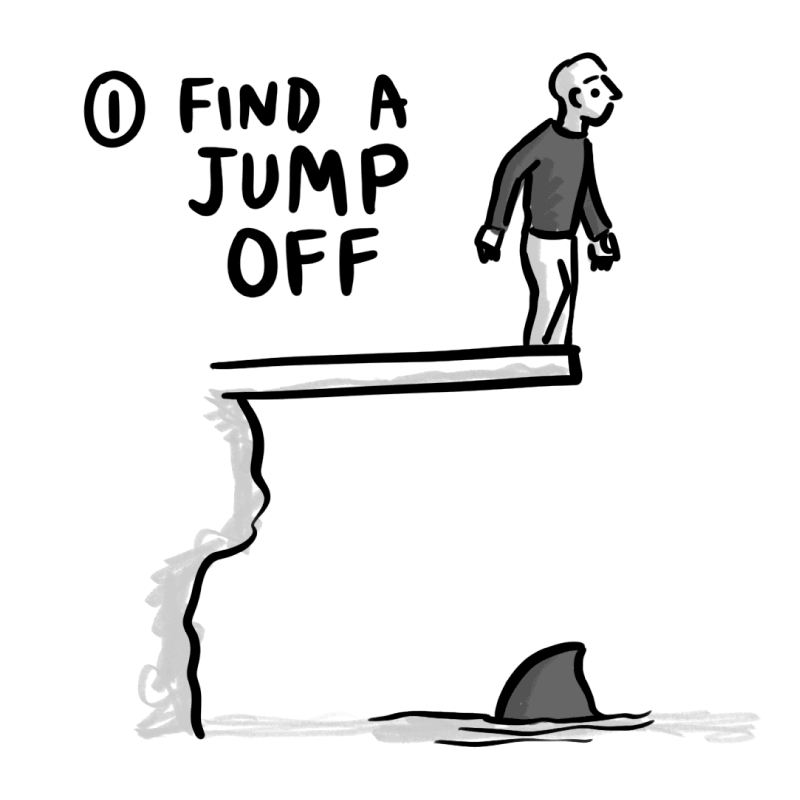
Start with a thought or memory. I’ll often have some inspiration during or straight after a run when I’m in the shower - a little gift from my subconscious, stimulated by water on skin. Now that’s interesting I’ll hear myself say. It’s the starting point for a page in my journal. It’s a moment of clarity or a feeling that needs to be explored. It’s a little tickly recollection in the armpit of a forgotten personal world. It’s just a place to start.
|
|
|
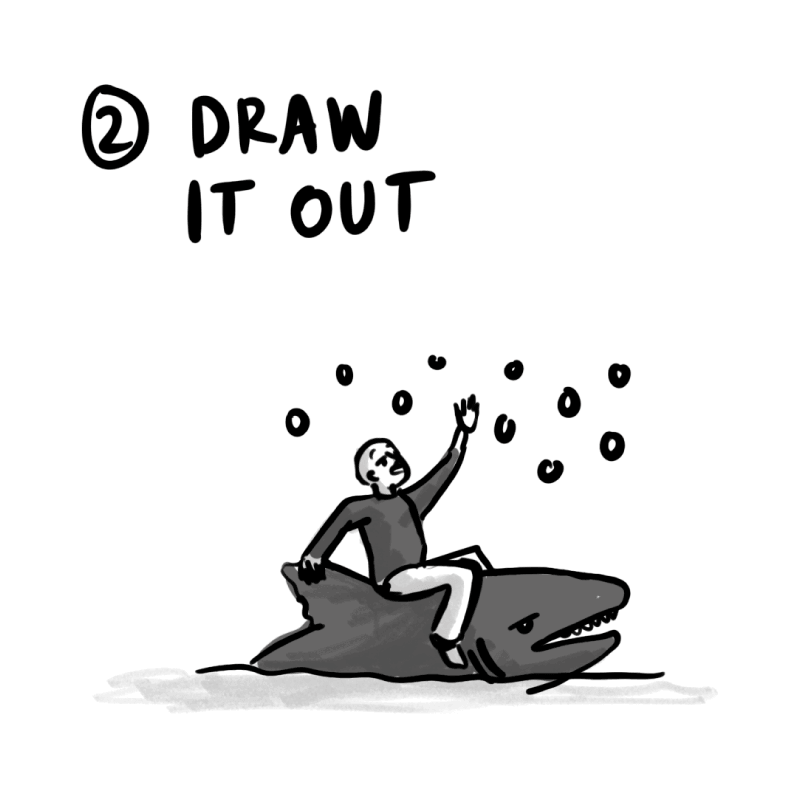
Whatever comes, draw it out on the page. Made up of words and doodles, it’s messy and scribbly. There are speech bubbles and faces, characters and scenes. This is free-flowing, free-falling, leaning into the memory or half-baked thought that presents itself and reaching for it, holding it, sitting with the pain of it. Wondering at it, re-inhabiting how it felt and reflecting on it from your current viewpoint. These are the guts of the story.
|
Self portrait as self-acceptance
|
My cartoon portrait is particularly easy to draw. A potato-shaped head with an angled nose and a couple of orange-segment ears. In fact, my face is the basis for most characters I draw - sssh! don’t tell anyone - just add hair and expression. Tweak the nose, paint in the skin tone. Variations on a theme of me.
|
|

|
|
But how I see myself in the mirror is not how you see me. The eye might witness light - but it’s the brain that interprets what it means. What I see is entangled in all sorts of strange things I believe or have believed about myself. I’ve found that there’s a process of self-acceptance in simply drawing yourself as a cartoon character. I’ve not only made peace with what I see as me, but it’s become my cartoonist identity. I might even like it…
|
|
|
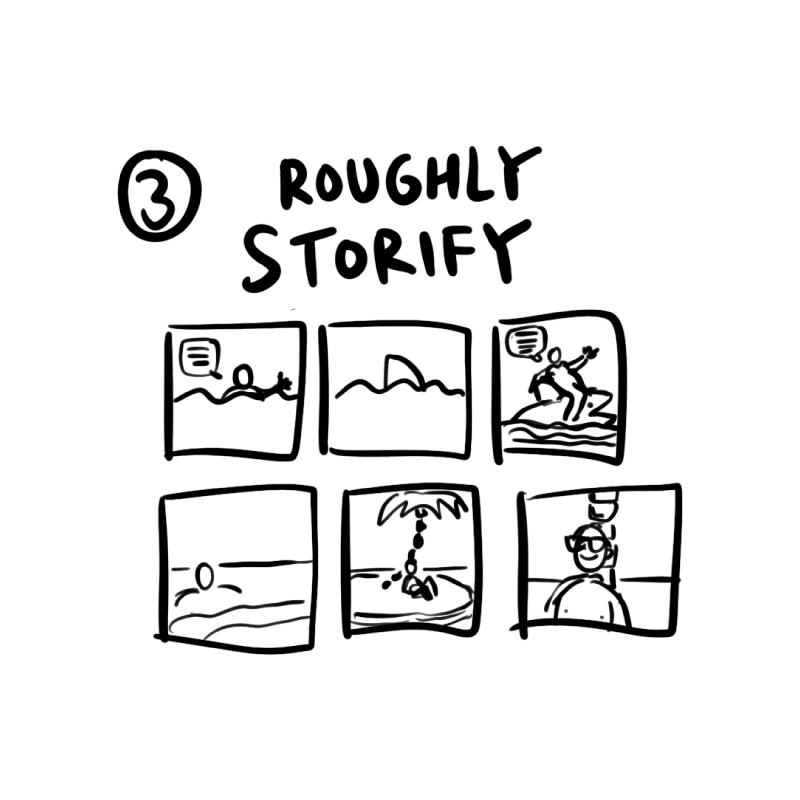
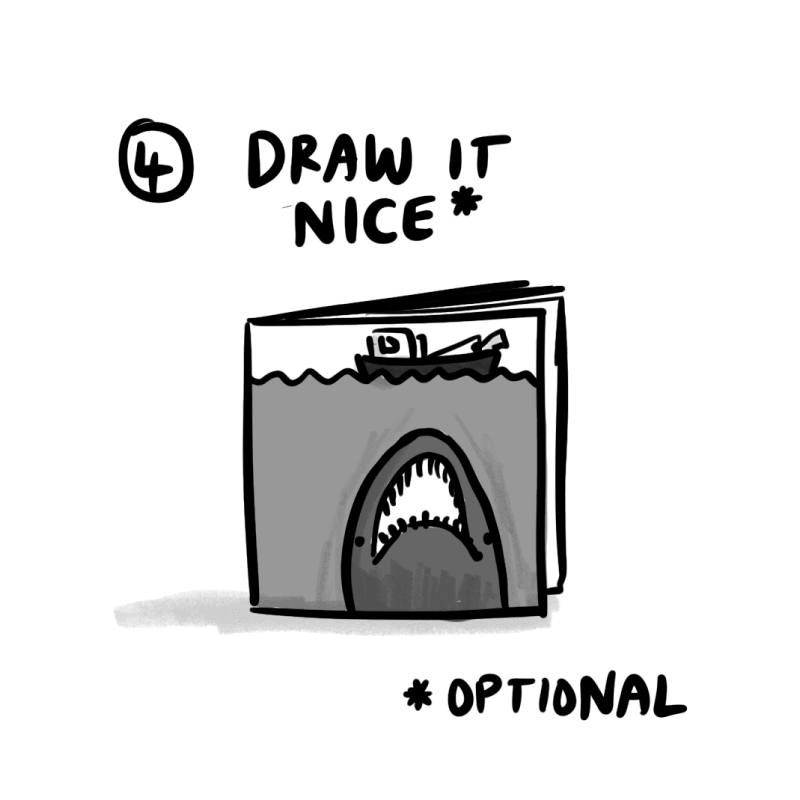
To turn it into a story, I use a little square blank paper booklet. It’s quite simple, but the square pages provide the constraint that forces me to chop the messy thought-doodles up into pages that start to make sense as a cartoon story. I’ve pinched this from lo-fi Zine-making - it struck me as such a simple way of organising thoughts. I’ll often need to switch around some of the pages, but before too long I have a story that hangs together. The story is now established - I can see it in my head - and so it forms a new narrative in my brain, which I can reach for at any time.
|
Peripheral Vision
|
To draw a cartoon, you must start somewhere. As I start the process of drawing, the cartoon starts to tell me what else needs to be there. That may sound weird, but the brain is so good at painting in the detail. One of my favourite facts is that your peripheral vision (what your eye actually senses) is actually in black and white. Your brain uses a combination of small eye movements, memories and expectation to paint in the colour which you then perceive. Similarly, with my reflective cartoon, things start to appear out of the page and into the foreground. What should go here? Without thinking, my pen answers. I know what goes here…
|
|
|
With the story established, I photograph it with my iPad, and draw it again digitally. Drawing it for a second time allows me to evolve it further, edit the narrative and add some colour too.
|
It’s now accessible to other people, who might get something from stepping into my story. Cartoons leave space for productive ambiguity - that’s why as a communication medium they work so well - the viewer is constantly adding their own bits of meaning to the lines and shapes that I’ve drawn.
|
|
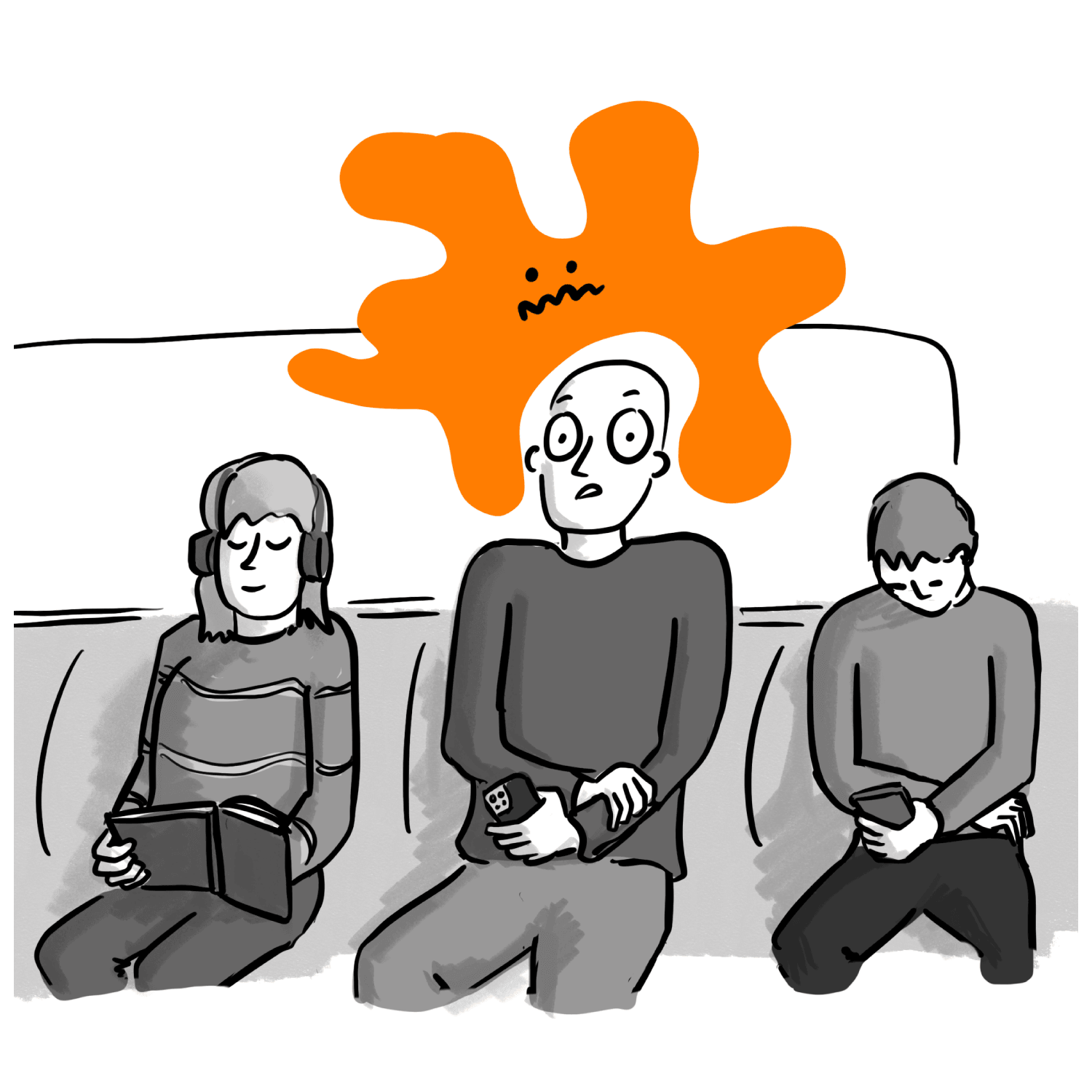
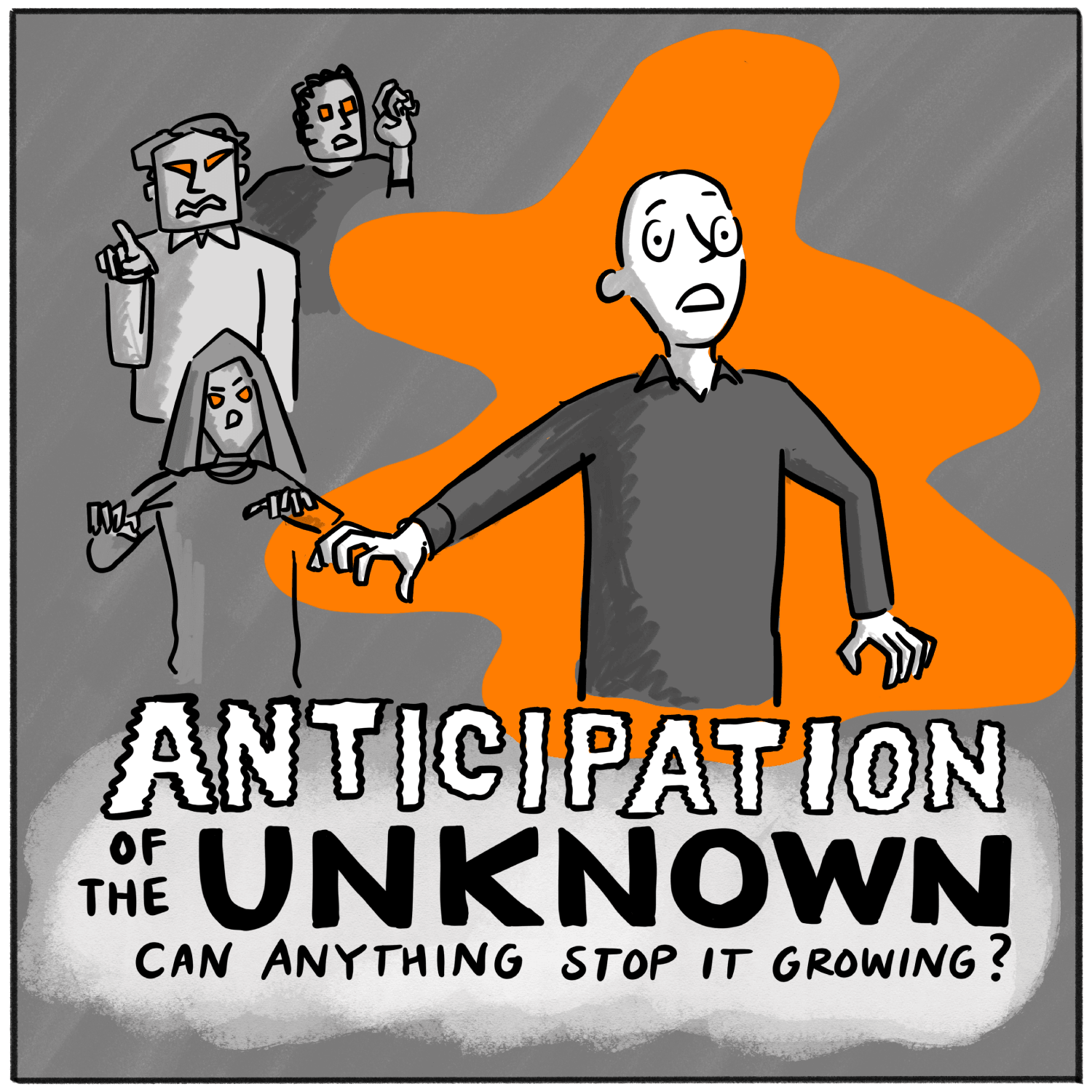
You might not believe me, but I regard this work as the most rewarding of all the sense-making work I’ve done. Here’s an example of a story that has already changed me. It’s a story of my own tendency to ruminate around an anxiety…
|
|
|
|
|
This story originates from a conversation with my wife about swimming at our local lido. I was trying to explain how I always had a reluctance to go, wary of the social negotiation - but yet always enjoyed it, and found myself uttering the phrase “the anticipation of negotiation”. And just like that, a little jump-off point presented itself…
|
3 unexpected outcomes
And the impact? Well, as a result of creating this reflective cartoon story, three magical things have happened.
|
- I have crafted a well-structured narrative full of personal meaning that I can reach for at any time.
- I have given a face to my anxiety - a different way of interacting with it and understanding it. I seem to be able to recognise it more easily now - rather than just be caught within it.
- I now find it much easier to talk (or even laugh!) about this stuff, without shame or embarrassment. The hold that this anxiety has had over me has diminished - I can feel it...
|
Making sense of my own self by drawing it out - who knew it would help so much with the pain of human existence…
|
|

|
|
|
More power to your sense-making elbows…
|
|
P.S. Other stories in this series are here:
|
|
|
|
|
|
|
|
|
|
You are receiving this visual newsletter because you are very sensible and signed up for an occasional dollop of Visual Thinkery, at our website, visualthinkery.com.
|
If you'd like to send us some thoughts, just hit reply to this email. :)
|
|
|
|
|